# Memory --- CS 130 // 2022-10-20 <!--=====================================================================--> # Review <!-- .slide: data-background="#004477" --> <!--=====================================================================--> ## Sequential Logic - **Sequential** logic circuits do have memory + <!-- .element: class="fragment"--> Output depends on both the input and current state of memory + <!-- .element: class="fragment"--> Behavior can change **over time** <!--=====================================================================--> ### Sequential Logic Components - **Clock**: a signal that oscillates between 0 and 1 - <!-- .element: class="fragment"--> **Latch**: 1-bit memory element that is updated when the clock is 1 - <!-- .element: class="fragment"--> **Flip Flop**: 1-bit memory element that is updated when the clock transitions from a 1 to a 0 - <!-- .element: class="fragment"--> **Register**: multi-bit memory unit (32 or 64 bits) that consists of an array of flip flops or latches - <!-- .element: class="fragment"--> **Register Files**: An array of registers <!--=====================================================================--> ## S-R Latch <div class="twocolumn"> <div> - A "set reset" latch is implemented with <img src='/~manley/CS130/Fall2022/assets/images/COD/sr-latch.png' alt="S-R latch diagram" /> </div> <div style="font-size: 90%"> <table> <tbody> <tr><th>$S$</th><th>$R$</th><th></th><th>$Q_\text{next}$</th></tr> <tr> <td>0</td> <td>0</td> <td></td><td>$Q$</td></tr> <tr> <td>0</td> <td>1</td> <td></td><td>0</td></tr> <tr> <td>1</td> <td>0</td> <td></td><td>1</td></tr> </tbody> </table> </div> </div> <!--=====================================================================--> ## D Latch <div class="twocolumn"> <div> - A "data" latch is implemented with <img src='/~manley/CS130/Fall2022/assets/images/COD/d-latch.png' alt="D latch diagram" /> </div> <div style="font-size: 90%"> <table> <tbody> <tr><th>$C$</th><th>$D$</th><th></th><th>$Q_\text{next}$</th></tr> <tr> <td>0</td> <td>0</td><td></td><td>$Q$</td></tr> <tr> <td>0</td> <td>1</td><td></td><td>$Q$</td></tr> <tr> <td>1</td> <td>0</td><td></td><td>0</td></tr> <tr> <td>1</td> <td>1</td><td></td><td>1</td></tr> </tbody> </table> </div> </div> <!--=====================================================================--> # ROM <!-- .slide: data-background="#004477" --> <!--=====================================================================--> ## ROM: Read-Only Memory - Intended only to be read from (though it may be possible to change it in some circumstances) - **Non-volatile**: keeps its value without power - Game Cartidges, CD-ROM, DVD - Firmware for PCs and other devices + contains boot-up instructions  <!-- .element width="200px" --> 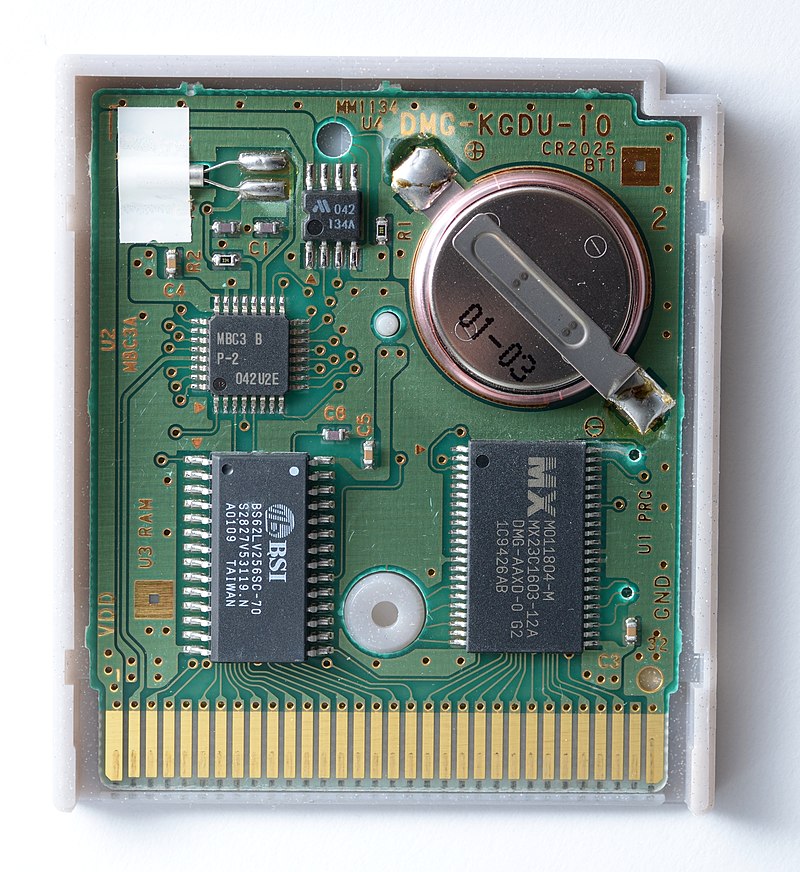 <!-- .element width="200px" --> <!--=====================================================================--> # RAM <!-- .slide: data-background="#004477" --> <!--=====================================================================--> ## RAM: Random Access Memory - It takes the same amount of time to access data regardless of where it is 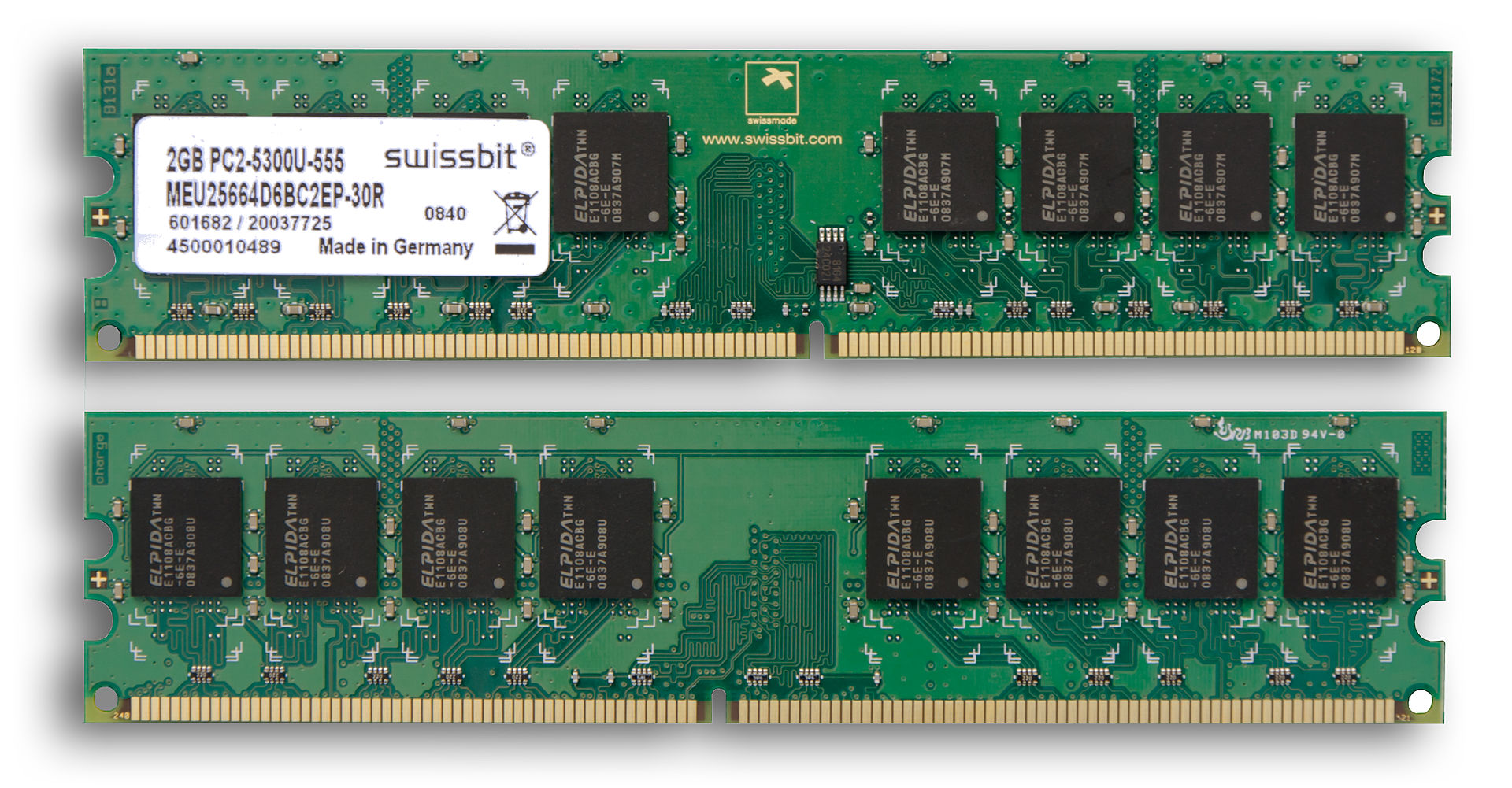 <!-- .element width="400px" --> <!--=====================================================================--> ## Static Random Access Memory - Memory where data is stored *statically* with flip-flops - Faster than DRAM but less dense (lower capacity) and more expensive per bit - As long as it has power, SRAM will keep its value - Usually used for cache memory <!--=====================================================================--> ## Dynamic Random Access Memory - DRAM is the most dense of RAM * Implemented with capacitors instead of latches - stores energy in an electrical field - Must be occasionally "refreshed" because the capacitors slowly lose their stored values * This is why it is called "dynamic" - Usually used for large capacity RAM <!--=====================================================================--> ## Instruction Memory on the CPU 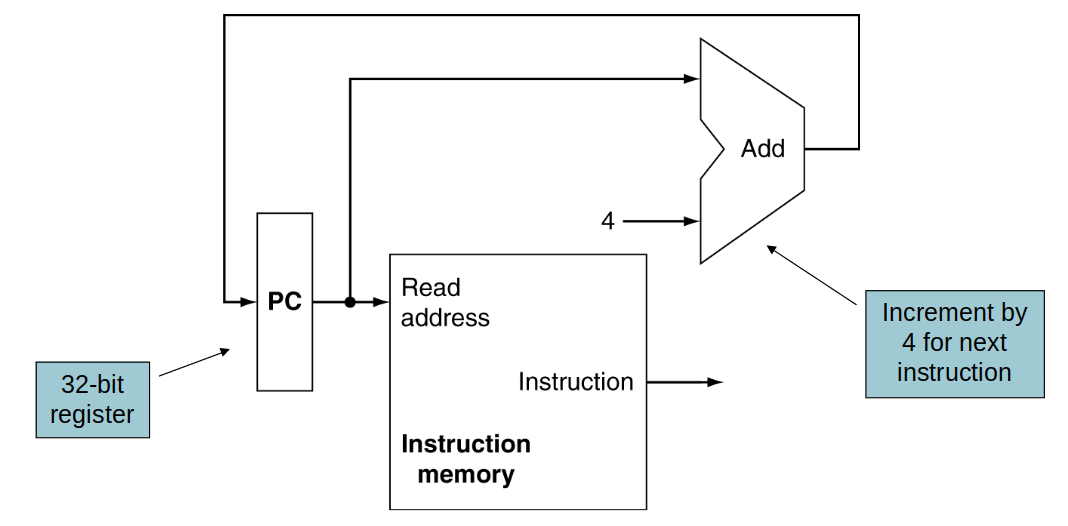 <!--====================================================================--> ## Demo: Make it in Logisim - We will use a ROM to simulate our instruction memory 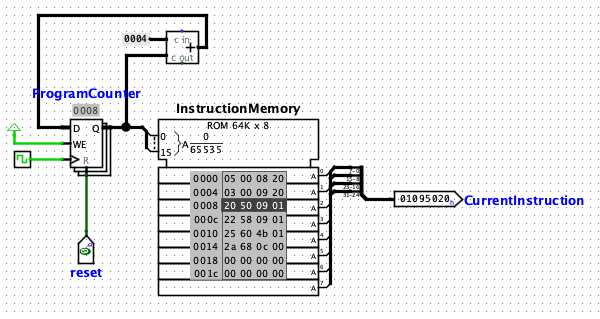 <!--====================================================================--> ## Exercise - Write a MIPS program, load it into your ROM 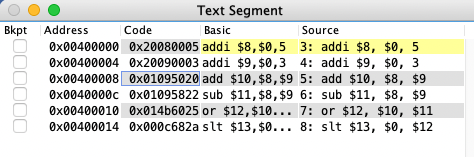 <!-- .element width="600px" --> 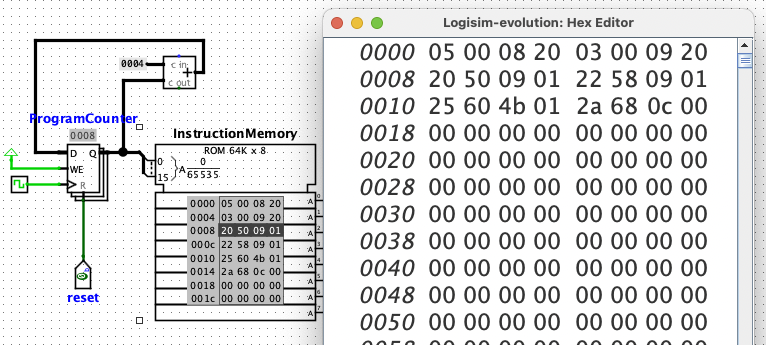 <!-- .element width="600px" --> <!--====================================================================--> ## Exercise - You can set your splitter to have custom fan-out ranges - Make a separate pin for each instruction field (opcode, rs, rt, etc.) <div class="twocolumn"> <div> 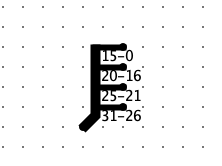 </div> <div>   </div> </div>